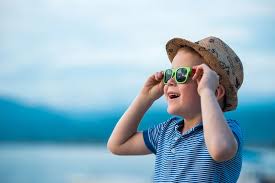

Clear vision directly affects how well children learn, concentrate and engage in the classroom. Students rely on their eyesight for nearly every school activity, from reading worksheets to following demonstrations on the whiteboard, and even mild vision problems can reduce focus, slow reading speed and undermine academic confidence. Many parents assume their child would mention blurred vision or eye discomfort, but kids rarely complain because they do not know what clear, comfortable sight should feel like. Understanding the connection between children's vision and learning helps families recognise when an eye test might address struggles that seem behavioural or academic on the surface.
How vision supports everyday learning tasks
Reading requires the eyes to track smoothly across lines of text, focus quickly on different distances and work together to create a single clear image. When vision is unclear or the eyes struggle to coordinate, children tire quickly, lose their place on the page or avoid reading altogether. Copying notes from the whiteboard demands rapid focus shifts between near and far distances, and students with uncorrected vision problems often fall behind or copy incorrectly. Digital learning adds another layer of visual demand, as screens require sustained near focus and precise eye movements to navigate interactive content. Each of these everyday classroom tasks becomes harder when a child's eyesight is not functioning comfortably, even if the vision issue seems minor to an adult.
Common vision-related learning challenges
Eye strain in children often shows up as fatigue, headaches or reduced concentration rather than obvious vision complaints. Students with tracking difficulties may skip lines while reading, reread sentences without realising it or struggle to follow along during group reading activities. Blurred distance vision makes it hard to see the board clearly, leading to incomplete notes, confusion about instructions and reliance on asking classmates for help. Children assume everyone experiences the same visual effort they do, so they adapt by working harder, guessing at information or avoiding tasks that feel unnecessarily difficult. Teachers and parents often interpret these behaviours as lack of focus, low motivation or learning difficulties when the underlying cause is simply uncorrected vision.
Screen time and visual fatigue during the school year
Digital devices require sustained close focus that can strain developing eyes, particularly when screen use is frequent or prolonged. Students using tablets, laptops or interactive whiteboards throughout the school day experience visual fatigue from reduced blinking, constant near focus and the effort required to process digital content. After-school screen time for homework, messaging or entertainment adds to this cumulative visual load. While screens are a normal part of modern learning and childhood, balancing device use with regular breaks and outdoor time helps reduce eye strain and supports healthier visual development. Parents do not need to eliminate screens, but encouraging children to look away from close work every 20 minutes and spend time outdoors each day creates better conditions for comfortable vision.
When to consider glasses or contact lenses for students
Glasses or contact lenses become appropriate when a child's vision affects their ability to learn comfortably, see clearly at necessary distances or participate fully in school and activities. The decision depends on the type and degree of vision problem, the child's age, their daily activities and how well they can manage vision correction independently. Some students benefit from glasses worn full-time, while others need them only for specific tasks like board work or reading. Contact lenses offer an alternative for older children and teens who play sport, prefer not to wear glasses or need vision correction that works better with lenses than spectacles. Through a comprehensive eye test, Groovy Glasses assess these factors and help determine which option supports each child's visual and lifestyle needs most effectively.
Myopia management options available at Groovy Glasses
Managing myopia focuses on slowing how quickly short-sightedness progresses during childhood, not just correcting blurred vision. Children with progressing myopia benefit from interventions that reduce the rate of eye growth and lower the risk of high myopia in adulthood. Groovy Glasses offers several evidence-based approaches tailored to each child's age, lifestyle and clinical needs.
Orthokeratology lenses are worn overnight to gently reshape the cornea, allowing children to see clearly throughout the day without glasses or daytime contact lenses. This option suits active students and teens who play sport or prefer not to wear vision correction during school hours.
Daily disposable soft contact lenses designed specifically for myopia control are available for children aged eight and above. These lenses correct vision while incorporating design features that slow eye growth, and the daily replacement schedule reduces infection risk and simplifies care routines for young wearers.
Advanced spectacle lenses provide a safe, effective option for younger children or those not ready for contact lenses. These specially designed glasses correct vision while helping to slow myopia progression through optical features built into the lens.
Low-dose atropine eye drops can be used as part of a structured myopia management plan, either alone or combined with other treatments. The drops are applied daily and have been shown to slow myopia progression with minimal side effects when used under professional supervision.
Combination therapy may be recommended when a single approach does not provide adequate control or when clinical assessment suggests multiple interventions would benefit the child.
Our approach to myopia management is guided by current evidence and individualised to each child's needs. We monitor progress regularly and adjust treatment as children grow and their eyes develop.
Why pre-term eye testing supports a stronger school start
Booking an eye test before the school term begins allows children to start the year with clear, comfortable vision rather than spending weeks struggling while parents arrange appointments and wait for glasses. Early testing gives families time to explore vision correction options, try contact lenses if appropriate and ensure children feel confident wearing their new glasses before facing classmates. Students who begin term visually prepared show better focus from day one, keep up with classroom activities more easily and avoid the academic disruption that comes from undiagnosed vision problems. For Christchurch families, scheduling a back to school eye test as part of term preparation makes practical sense and sets children up for learning success. Our children's eye exams provide thorough assessment of vision, eye health and visual function in a child-friendly environment.
Book a comprehensive children's eye exam at Groovy Glasses before the school term starts and give your child the clear, comfortable vision they need to learn confidently.